
What we find
Photographs from inspections around Benton and Saline County. Some show a problem worth knowing about before you buy. Others show work done properly — which is just as much a part of the report.
Every photo below was taken on a working inspection. The marker shows what we were looking at, and the note with it says why that mattered. 13 findings needing attention, 5 showing a system doing its job.
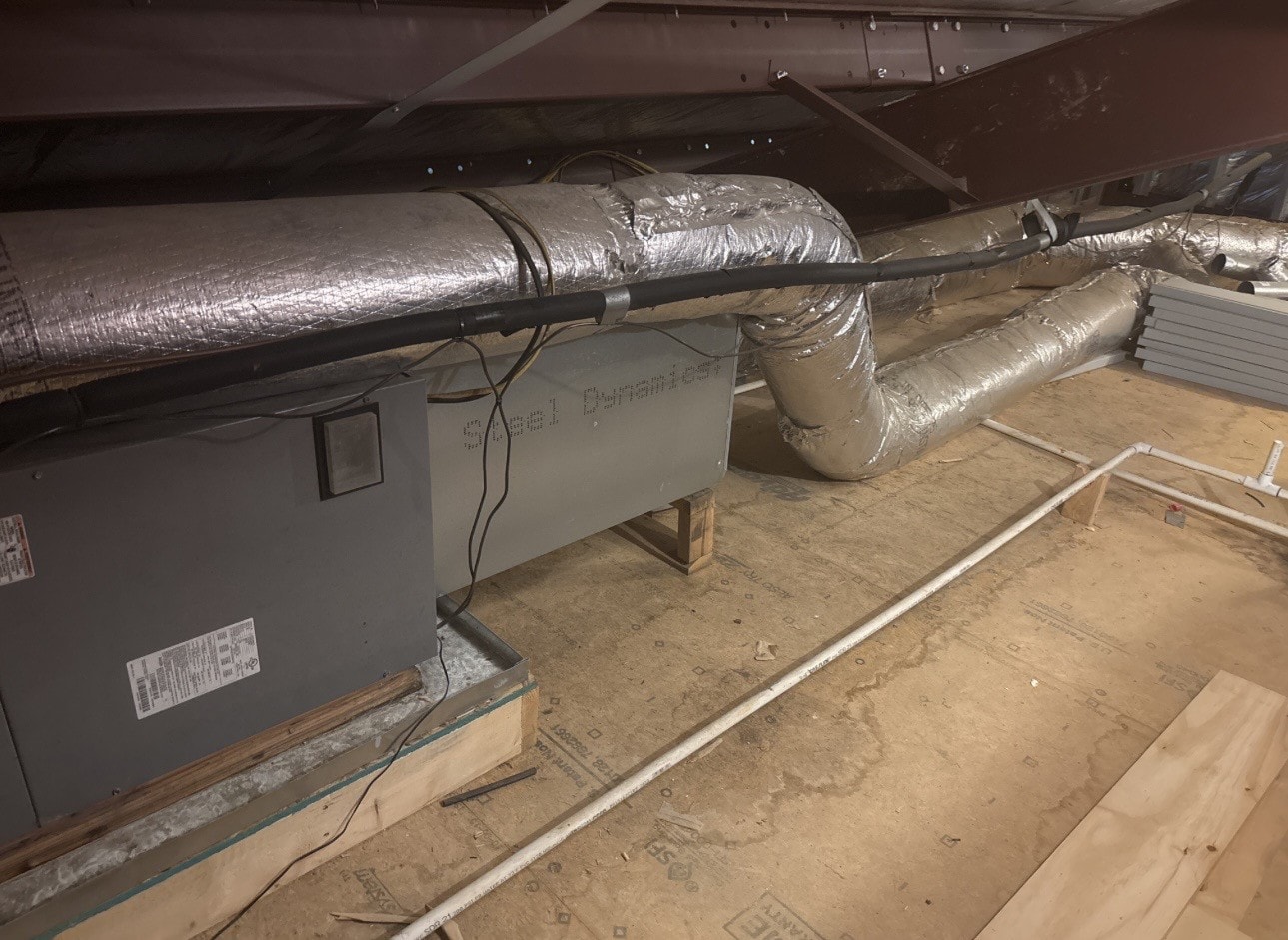
Ductwork done right
The main run leaving this air handler is properly supported and fully wrapped. In an unconditioned Arkansas attic that insulation is what keeps the ducts from sweating in July and stops the cooled air bleeding away before it reaches the rooms.
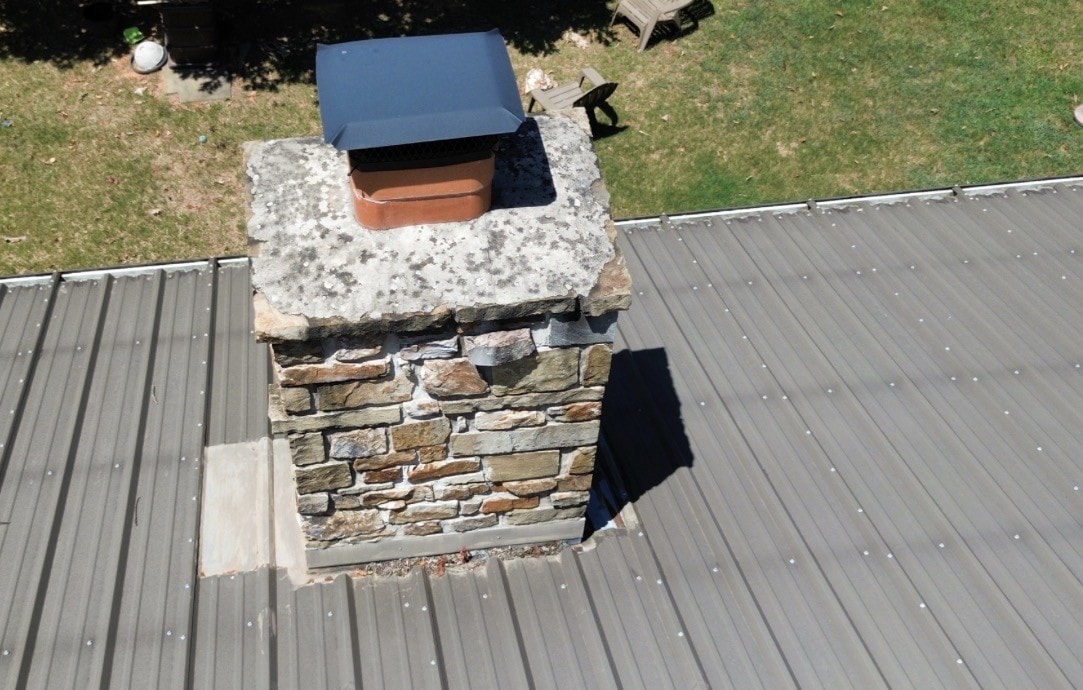
No cricket behind the chimney
There is no saddle diverting water around the upslope side of this chimney, so rain and leaf debris collect against the back of the flashing instead of running past it. Left alone, that standing water is a common source of leaks and rotted sheathing.
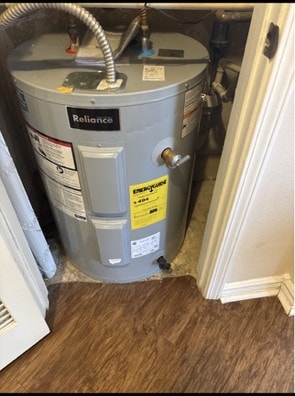
No discharge pipe on the TPR valve
The relief valve on this water heater opens straight into the room. If it ever does its job, it releases scalding water at chest height into a closet somebody might be standing in. The fix is a length of pipe run down to within six inches of the floor.
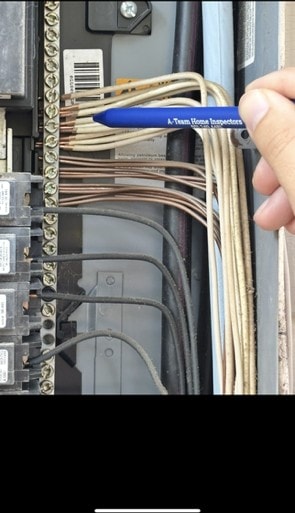
Two wires, one screw
Two conductors are clamped under a single terminal screw that was built for one. The screw cannot hold both evenly, so one works loose over time — and a loose connection under load is how panel fires start.
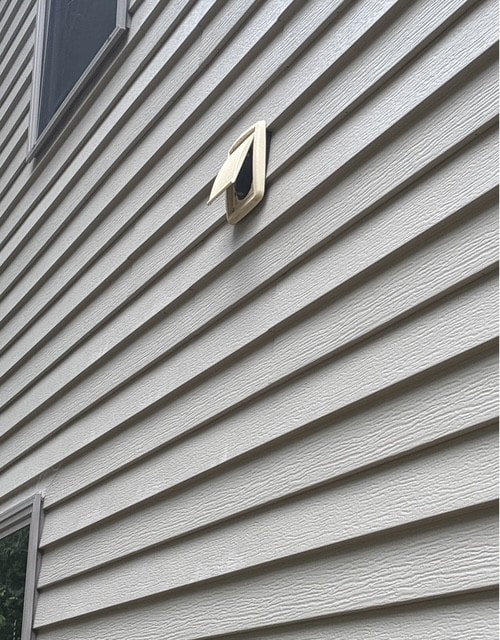
A vent that actually vents
The weighted flap swings clear when the fan runs and drops shut when it stops. That is the whole job — moisture out, birds and wasps stay out. More of these are painted shut or blocked than you would think.
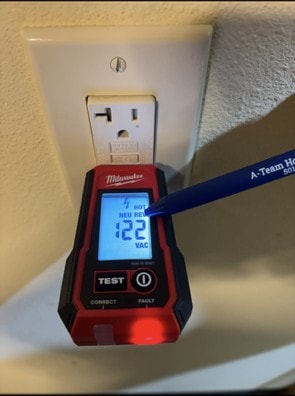
Hot and neutral reversed
The tester is reading hot and neutral swapped at a bathroom GFCI. Anything plugged in stays energised even switched off, and reversed wiring can stop the GFCI doing its job in exactly the wet conditions it was installed for.
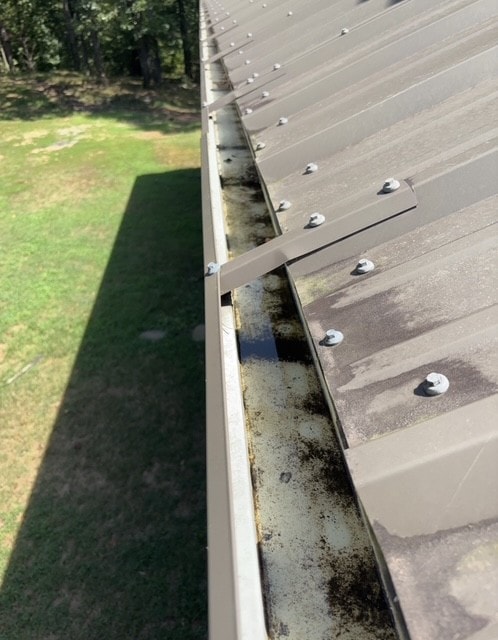
Gutter hung the right way
Seamless trough, correct pitch, and rigid hangers tying it back to the roof edge at proper spacing. That combination is what keeps water moving instead of standing in the channel and backing up under the panels.
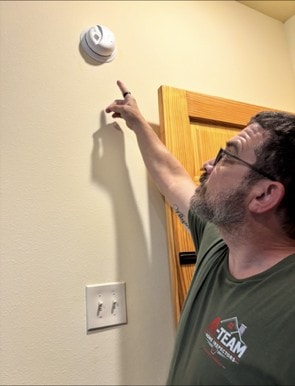
Alarm where it belongs
Mounted right outside the main bedroom door, which is where it does the most good. We check placement and function on every inspection, not just whether one exists.
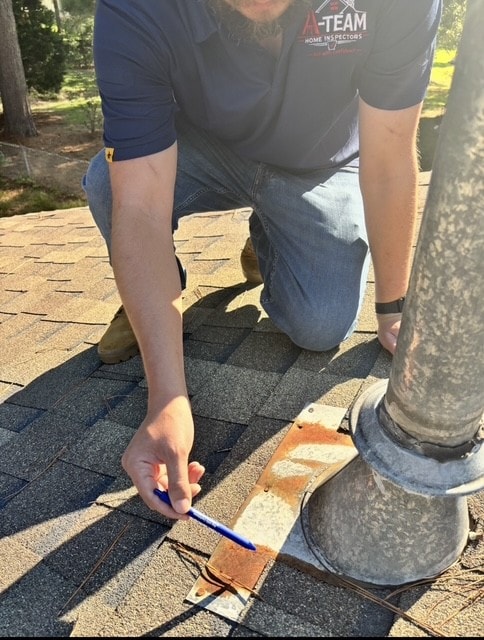
Rusted, unfastened vent flashing
The bottom flange of this vent flashing has rusted through its coating and lost the fasteners holding it down. Loose metal lifts in a good Arkansas windstorm, and rain goes straight under the shingles into the decking.
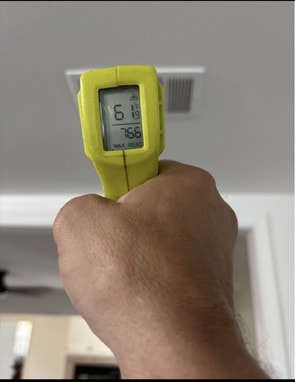
Measuring what the AC actually delivers
Reading supply air temperature at the register tells us the split across the coil — the difference between what goes in and what comes out. It is the quickest honest answer to whether a system is really cooling or just running.
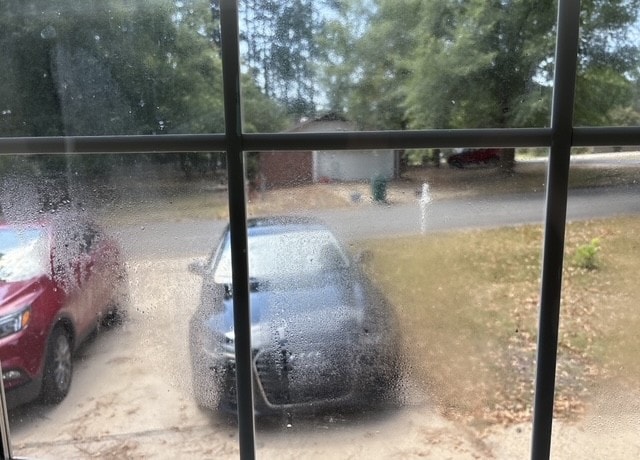
Fogged between the panes
Moisture sitting between the glass means the factory seal on this double-glazed unit has gone. The insulating gas is out, water vapour is in, and no amount of cleaning reaches it — the sealed unit has to be replaced.
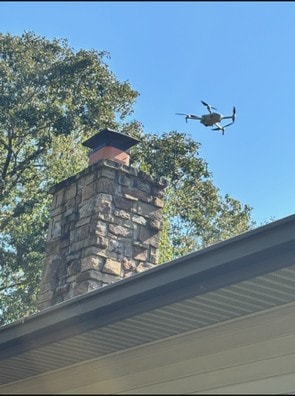
We walk roofs. When we can’t, we fly.
A steep pitch, a slate or tile surface, or a roof that is not safe to stand on gets the drone instead — close enough to read a flashing detail without putting a boot through anything. Everything else we walk.
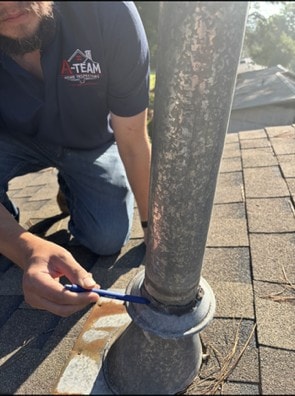
Failed seal at the vent collar
The caulk around this vent pipe has dried out, cracked and started falling away. Sun does that to ordinary sealant in a few seasons. Once the collar is open, water runs down the outside of the pipe and into the attic.
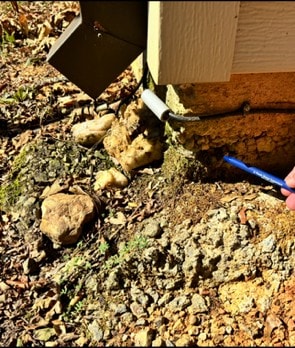
Downspout dumping at the foundation
Every inch of rain off this roof section lands in one spot against the foundation corner. The washed-out soil and the moss show how long it has been happening. An extension carrying it five or six feet out solves it cheaply.
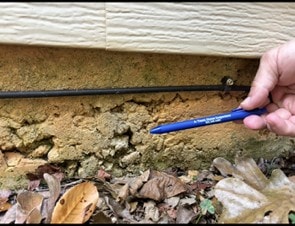
Spalling on the stem wall
The exposed face of this foundation is pitting and flaking away. Bare concrete drinks up ground moisture, and each freeze pushes the micro-cracks a little wider. A parge coat seals the surface before the aggregate starts letting go.
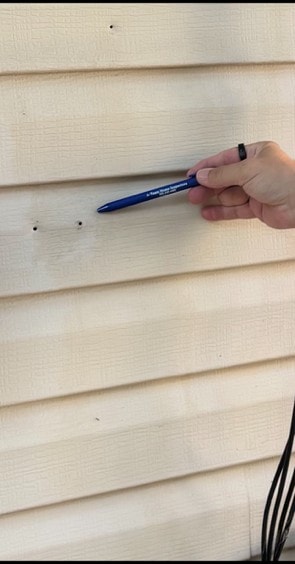
Open holes left in the siding
Whatever used to be mounted here came off and the screw holes were never sealed. Each one is a straight path through the cladding, and driving rain will find them long before anyone notices damp inside the wall.
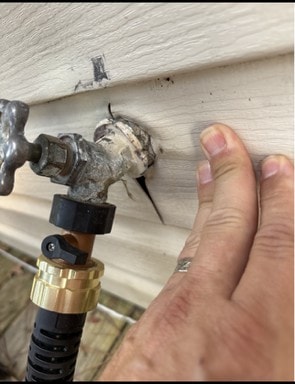
Split siding at the hose bib
The siding panel has torn open where the hose bib passes through it. Water gets behind the cladding and sits against the sheathing, and the same gap is a doorway for wasps, mice and anything else looking for a way in.
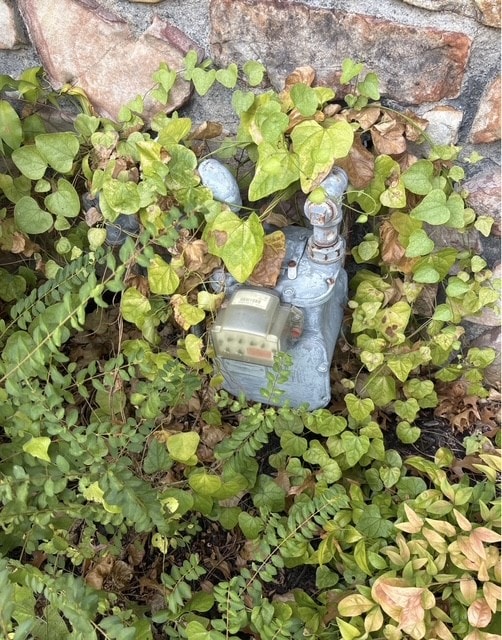
Gas meter buried in ivy
Ivy has swallowed the regulator and the dial face. Nobody is reading this meter, and in an emergency nobody is finding the shut-off quickly either. The trapped damp against the fittings is a slower problem but a real one.
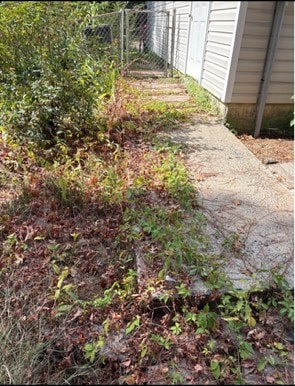
Roots lifting the walkway
Vegetation has taken over the path and the roots are pushing up under the concrete. Lifted panels are a trip hazard, and the growth holds water against the slab instead of letting it drain away.
Every finding here describes one specific home on one specific day. It is a record of what we saw at that property, not advice about any other.
Let's take a close look at your future home.
Book an inspection with A-Team and buy with confidence.